
What It Is
A Dumbbell Workout Plan is a training program built around dumbbells (single-arm and two-hand variations) to develop strength, size, conditioning and movement quality. Dumbbell training is versatile — it suits home gyms, crowded commercial gyms, travel, and people who prefer unilateral work to fix imbalances. The core idea: use mostly compound dumbbell movements supplemented with targeted accessory work and progressive overload (increase reps or weight over time).

Who It’s For
- Beginners who don’t yet have barbell access but want full-body strength.
- Intermediate lifters using dumbbells for variety, injury management, or unilateral balance work.
- Time-pressed lifters who prefer simple setups and less equipment.
- Home gym owners who have 1–3 pairs of adjustable dumbbells.
- Rehab / prehab clients who need more joint-friendly loading patterns.
Not ideal for: lifters seeking maximal single-rep barbell strength (e.g., 1RM powerlifting) — though dumbbell work can complement that.
Structure / How It’s Done
Dumbbell programs can be programmed many ways. Below are three practical templates you can use depending on your level and schedule:
- Beginner — Full Body (3×/week): Great for novices, simple, frequent practice of movement patterns.
- 4-Day Upper/Lower (Dumbbell Variant): For intermediates who want more volume without crowding.
- Dumbbell PPL (3–6 day options): For lifters wanting more targeted hypertrophy and higher frequency.
Common rules across all templates:
- Use progressive overload: increase reps → then increase weight.
- Warm up thoroughly (cardio + ramp sets).
- Rest 90–180s for big compound sets; 45–75s for isolation/accessory sets.
- Track weights and reps each session.
Warm-Up & Movement Prep
General warm-up (5–8 min):
- Light cardio (bike, row, brisk walk) 3–5 min
- Dynamic mobility: shoulder circles, hip swings, leg swings 2–3 min
Specific warm-up (before first compound):
- 2–3 ramp sets with lighter dumbbells (e.g., bodyweight → light DB → near working).
- Example (DB Bench work weight 20 kg each): 8–10 reps with 8–10 kg, 5 reps with 14–16 kg, then working sets.
Rest between sets:
- Compound dumbbell moves (DB squat, DB bench, single-arm row): 90–150 seconds.
- Hypertrophy/accessory (lateral raises, curls): 45–75 seconds.
Progression Rules (How to Increment)
Use a consistent, simple progression system:
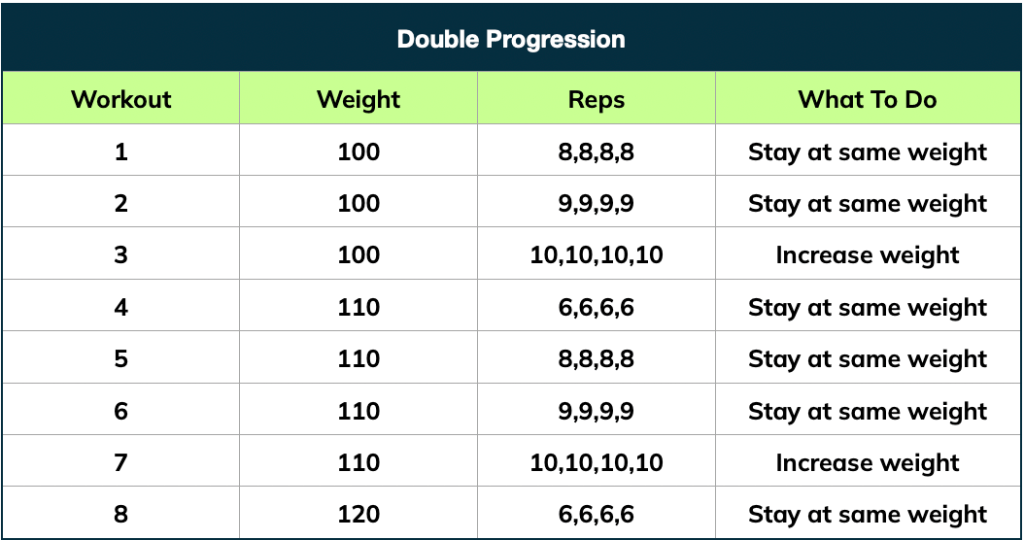
- Double progression (preferred): target a rep range (e.g., 8–12). When you hit the top of the range for all sets, increase weight next session and reset to the lower end of the range.
- Micro increments: increase weight by the smallest practical step you have (2.5 lb / 1.25 kg per dumbbell if possible; otherwise add 1–2 reps per set until you can change pairs).
- Upper vs lower-body increments: for lower-body dumbbell exercises you can increase weight in larger steps (2.5–5 kg per dumbbell); for upper body use smaller steps (1.25–2.5 kg).
- If you fail a session: repeat the same weights next workout. If failure persists 2 sessions in a row → reduce load 5–10% or lower the rep target for 1–2 weeks (deload).
- Frequency & cycles: run 6–12 week blocks, then take an easier week or switch focus (strength ↔ hypertrophy).
Workout Routines (Tables with progression notes)
Routine A — Beginner Full-Body (3×/week)
Schedule: Mon / Wed / Fri (or Mon / Thu / Sun)
| Exercise | Sets × Reps | Notes (progression & increments) |
|---|---|---|
| Goblet Squat | 3 × 8–12 | Increase weight when 3×12 done with good depth. +2.5–5 kg DB. |
| Dumbbell Romanian Deadlift (RDL) | 3 × 8–12 | Add weight when 3×12 clean. +2.5–5 kg DB. |
| Dumbbell Bench Press (flat) | 3 × 8–12 | Double progression: top reps → increase +1.25–2.5 kg per DB. |
| Single-Arm Dumbbell Row | 3 × 8–12 per side | Add reps then load. +1.25–2.5 kg per DB. |
| Dumbbell Overhead Press | 2–3 × 8–10 | Increase when top reps reached; small jumps. |
| Farmer Carry (hold) | 2 × 40–60 s | Increase load or distance/time (progressive). |
| Plank / Pallof Press | 3 × 30–60 s | Add time or light weight after baseline |
Rest: 90–120s compounds, 60s accessories.
Routine B — Intermediate 4-Day Upper / Lower (Dumbbell Variant)
Schedule: Mon Upper A, Tue Lower A, Thu Upper B, Fri Lower B
Upper A
| Exercise | Sets × Reps | Notes |
|---|---|---|
| DB Flat Press | 4 × 6–8 | Strength focus — increase weight when 4×8 hit. +1.25–2.5 kg/DB |
| Single-Arm Row | 4 × 6–8 | Increase when 4×8 hit |
| DB Overhead Press | 3 × 6–8 | Small increments (+1–2 kg) |
| Incline DB Fly | 3 × 10–12 | Add reps then weight |
| Hammer Curls | 3 × 10–12 | Increase when reps top out |
Lower A
| Exercise | Sets × Reps | Notes |
|---|---|---|
| DB Split Squat (each leg) | 4 × 6–8 | Add DB weight or reps; +2.5–5 kg/DB |
| Dumbbell Deadlift (heavy) | 4 × 6–8 | Increase when sets completed properly |
| Goblet Reverse Lunge | 3 × 8–10 per leg | Progress reps → weight |
| Standing Calf Raise (DB) | 4 × 12–15 | Add DB or tempo |
Upper B
| Exercise | Sets × Reps | Notes |
|---|---|---|
| Incline DB Press | 4 × 8–10 | Hypertrophy emphasis |
| One-Arm DB Row (heavy) | 4 × 8 | Increase load gradually |
| DB Arnold Press | 3 × 10–12 | Add reps then weight |
| Lateral Raise | 3× 12–15 | Micro-increments |
| Triceps Kickback / Skullcrusher (DB) | 3 × 10–12 | Progress carefully |
Lower B
| Exercise | Sets × Reps | Notes |
|---|---|---|
| DB Front Squat or Goblet (heavy) | 4 × 6–8 | Increase DBs when able |
| Romanian Deadlift | 4 × 8–10 | Add small weight jumps |
| Bulgarian Split Squat | 3 × 8–10 per leg | Progress as above |
| Glute Bridge (DB) | 3 × 10–12 | Add DB plate on hips |
Rest: 2–3 min compounds, 60–90s accessories.
Routine C — Advanced Dumbbell PPL (4–6 day flexible)
Option: 3-day PPL (each once per week) or 6-day (repeat cycle twice).
Push Day
| Exercise | Sets × Reps | Notes |
|---|---|---|
| DB Bench Press (flat) | 4 × 6–8 | Strength focus: +1.25–2.5 kg/DB when top reps hit |
| DB Overhead Press | 4 × 6–8 | Progress small increments |
| Incline DB Press | 3 × 8–12 | Increase after hitting top range |
| DB Lateral Raises | 3 × 12–15 | Slow micro progression |
| Triceps DB Skullcrusher | 3 × 10–12 | Add reps then weight |
Pull Day
| Exercise | Sets × Reps | Notes |
|---|---|---|
| Weighted Pull-Ups or DB Rows | 4 × 6–8 | Add small plates or heavier DBs |
| Single-Arm DB Row | 4 × 8–10 | Progress reps then load |
| Seated DB Hammer Curl | 3 × 10–12 | Add 1–2 kg per DB as able |
| Face Pull (band) | 3 × 12–15 | Improve shoulder health |
Leg Day
| Exercise | Sets × Reps | Notes |
|---|---|---|
| DB Back / Front Squat | 4 × 6–8 | Heavier load if possible |
| DB Romanian Deadlift | 4 × 8–10 | Progress load |
| Walking Lunges | 3 × 12 per leg | Add DBs or increase distance |
| Single-Leg Calf Raise | 4 × 12–15 | Add DB in hand for load |
Rest: 90–150s compounds, 45–75s accessories.
Programming Examples & Increments (Practical)
- Beginner (3×/week): aim to add +1–2 reps per set first week-to-week; when top reps hit across all sets, increase DBs by +1.25–2.5 kg each (upper body) or +2.5–5 kg (lower body).
- Intermediate (4-day): strength days use +1.25–2.5 kg increments for upper body and +2.5–5 kg for lower body per DB when top range achieved; hypertrophy days use double progression.
- Advanced / PPL: periodize: 3–4 weeks build, 1 deload; use micro jumps or tempo changes if no smaller weight plates are available.
Safety & Common Mistakes
- Don’t rush progression — keep form strict when increasing load.
- Unilateral work (single-arm rows, split squats) helps fix imbalances; always train the weaker side first.
- Grip & scapular control: dumbbells require more stabilizer engagement — warm the shoulders.
- If soreness is excessive: reduce volume (fewer sets) or increase rest.
Summary & My Thoughts
Dumbbell training is extremely powerful and underrated. It’s flexible, safer for many joint issues, and excellent for building balanced strength and muscle — especially when you follow a clear progression plan (increase reps → increase weight). For most lifters:
- Beginners: start with the full-body routine 3×/week — fast progress, low complexity.
- Intermediates: the 4-day Upper/Lower dumbbell variation gives strong balance between heavy compound stimulus and focused accessory work.
- Advanced: PPL dumbbell or mixed barbell/dumbbell programming works well — use periodization and deloads.